



















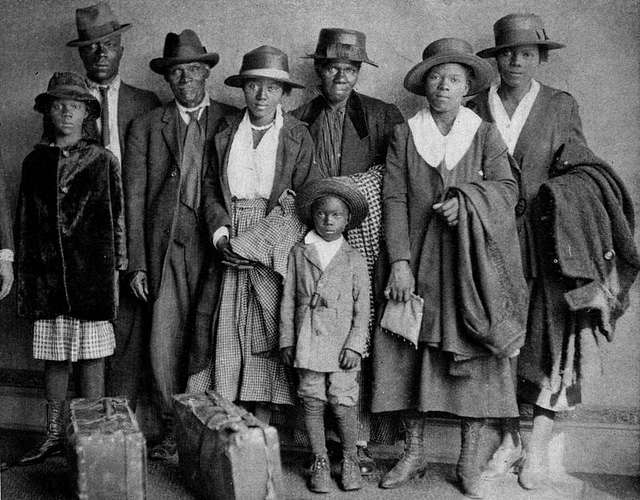
In The Warmth of Other Suns, Isabel Wilkerson tells the story of the Great Migration with a level of care and humanity that transforms history into lived experience. Rather than presenting the movement of millions of Black Americans from the South to the North and West as a set of statistics, Wilkerson centers her narrative on individual lives, allowing readers to understand the emotional weight and lasting impact of this defining chapter in American history.
The book follows three primary figures whose journeys span decades and regions. Through their stories, Wilkerson reveals both the brutality of the Jim Crow South and the quiet courage required to leave everything familiar behind. Their decisions to migrate are not framed as grand political statements, but as deeply personal acts driven by dignity, fear, hope, and the desire for a future unburdened by constant humiliation. This approach makes the scale of the Great Migration feel intimate and immediate.
One of the book’s greatest strengths is Wilkerson’s ability to balance narrative storytelling with rigorous historical research. She weaves personal anecdotes together with broader social analysis, showing how racially discriminatory laws, economic exploitation, and racial violence pushed families northward, while industrial opportunity and the promise of autonomy pulled them forward. The result is a history that feels both comprehensive and accessible, never losing sight of the people at its center.
Wilkerson also challenges the reader to consider the long-term consequences of the Great Migration. She traces how these movements reshaped American cities, labor markets, culture, and politics, while also acknowledging the isolation and disappointment many migrants faced upon arrival. The North was not free of racism, and the promised warmth often came with new forms of exclusion. This complexity prevents the book from slipping into merely sentimental romanticism.
Reading The Warmth of Other Suns is both sobering and deeply moving. Wilkerson writes with clarity and restraint, allowing the stories themselves to carry emotional weight without exaggeration. By the end, the Great Migration no longer feels like a distant historical event, but like a collective act of resilience that continues to shape the nation.
Ultimately, The Warmth of Other Suns is a powerful reminder that American history is defined not only by laws and leaders, but by ordinary people who made extraordinary choices in pursuit of dignity. It is a book that demands reflection and rewards careful reading, offering insight into the past while illuminating the roots of present-day inequality.