


















The Greatest Story Ever Written
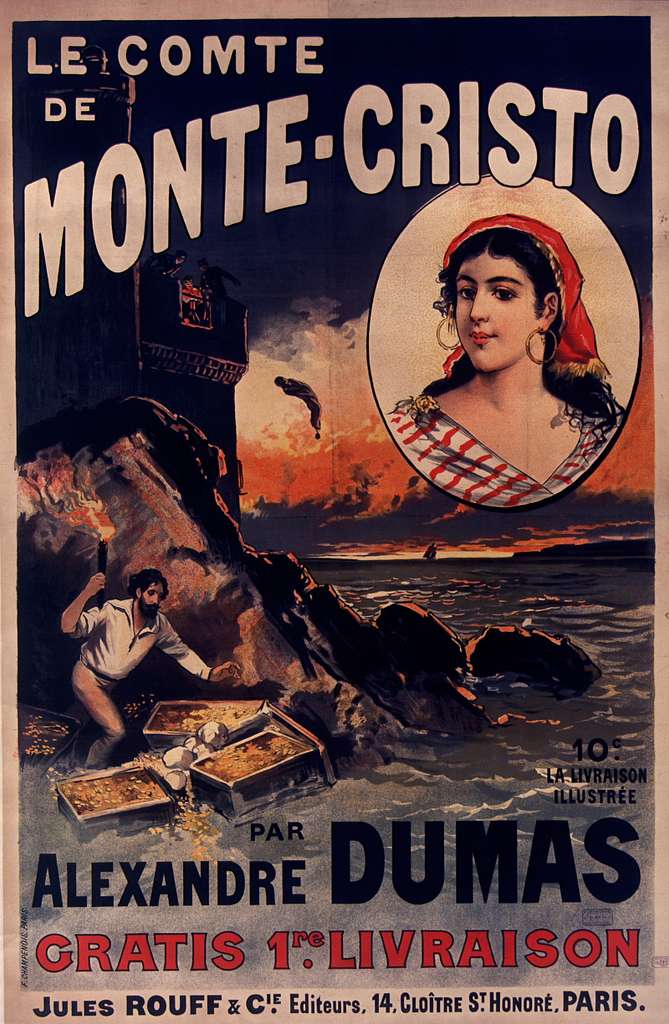
Alexandre Dumas’s The Count of Monte Cristo is, without a doubt, one of the greatest novels I have ever read. Published in 1844, this French classic has endured for nearly two centuries. At its core, the novel is a story about betrayal, patience, and the slow, calculated pursuit of justice and revenge. As a reader, this novel enthralls you, draws you in, and doesn’t let you put it down.
The Count of Monte Cristo is one of the few masterpieces where the hype is completely justified. Going into it, my main concern was that this book would be one of those “pretentious classics” — novels that get showered with praise by people simply because of their reputation as being “truly life-changing” or really “hard to read” or containing “such deep prose”. In my experience, these types of people talk more than they actually read. They care more about external validation for “reading” such a “complex” novel rather than actually critiquing it objectively. So I was a bit skeptical when I first picked Count up, considering the amount of praise it got.
But any doubt was immediately erased from my mind.
We are introduced to the protagonist in the first chapter. Edmond Dantès is a young, talented sailor from Marseille on the verge of having it all. He had recently got a promotion to captain, and has a loving fiancée in Mercédès. His likeable personality inspired the best in those around him. It also, however, brought about the worst in others.
Dante’s good fortune draws the ire of some around him. Ferdinand Mondego, consumed by his jealousy over Dante’s relationship with Mercédès (who was actually Ferdinand’s own cousin), Danglars, a bitter shipmate who coveted his captaincy, and Villefort, a royal prosecutor who places his own ambitions above justice, soon conspire to incriminate Dantes. They anonymously accuse Dantes of being a Bonapartist traitor, and he is arrested and placed into the prison fortress of the Château d’If with no hope of release.
Light Spoiler Warning Ahead
The next two hundred pages detail Dante’s time within the prison and his escape. During his time in the prison, Dantes learns of a great treasure hidden on the island of Monte Cristo from Abbe Faria, a fellow inmate. With the help of the Abbe, Dantes escapes.
Free at last, and with everything he needed to know, Dantes began his revenge journey. He found the riches on Monte Cristo. Now, as the richest man in Europe, Dantes, now known as the “Count of Monte Cristo” spends the next decade assimilating himself in European high society. He buys numerous properties, establishes credit with the largest banks, becomes acquainted with power figures, and firmly cements himself as a powerful — but mysterious — figure in Europe. Though his exploits in this decade are not explicitly stated, they are implied heavily in the text by Dumas.
With his feet firmly planted, Monte Cristo began to enact his elaborate revenge plan. That is as much as I will summarize here — read the book yourself to find out more.
The Count of Monte Cristo is by far the greatest book I’ve ever read. Its sheer size, scope, and consistently throughout all twelve hundred pages is unmatched by any other book I’ve read some really lengthy works (Wheel of Time, Stormlight, Mistborn to name a few). It’s an enthralling read through it entirely, and I found myself reading for hours at a time. I was able to finish this within a week during break. Very few books — and even fewer “classics” can have such a gripping hold on the reader as The Count of Monte Cristo has.
In short, I would highly, highly, highly, recommend this book to anyone who desires a fast-paced read. Though it does require investing some time and emotion, the ultimate payout of completing this book is like no other.
Grade: A+