













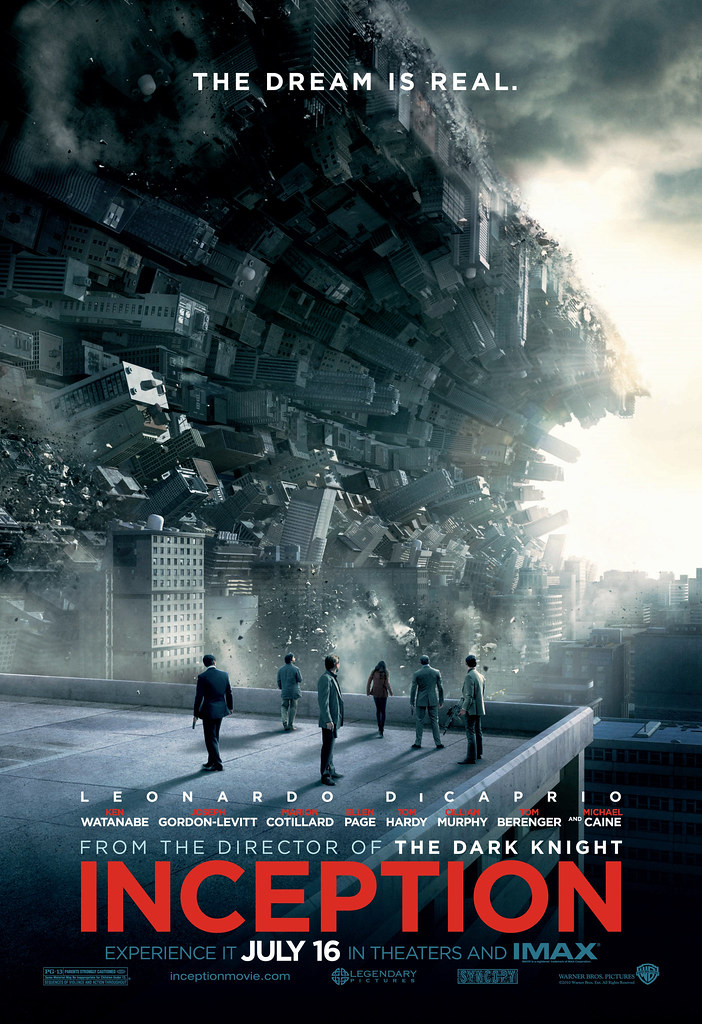
Science fiction has remained one of the most beloved movie genres in the cinema industry for more than a century. Since 1902 film fans have sought out the edges of their univerese. However, there remains controversy about which movie takes the #1 spot on the list. Often, the answer will depend upon whom you ask. Arguably, besides the 2014 blockbuster movie Interstellar, Christopher Nolan’s 2010 Inception managed to be both an exciting heist movie and a deeply moving exploration of grief.
Dom Cobb (Leonardo DiCaprio) is a professional thief with a niche ability known as “extraction”. He enters people’s dreams to steal their most valuable secrets. However, he’s offered a “one last job” chance to clear his criminal record. The catch, however, is that he has to plant an idea rather than steal one; this is known as “inception”.
To succeed, Cobb assembles a specialist team: the Point Man, Arthur, who handles the logic and logistics; the Architect, Ariadne, who designs the dream worlds; the Forger, Eames, who manipulates people and builds disguises within the dream state; and most importantly the Chemist, Yusuf, who keeps the team under sleep and determines when to them wake up.
Through the help of his team, Cobb eventually implants a memory onto his target and gets the opportunity to reunite with his family without any criminal record. Nonetheless, what’s most remarkable about this movie is not how Cobb pulled the stunt off, but how Nolan brought it all to life.
First, Christopher Nolan makes the confusing idea of “inception” comprehensible. The film spends its first act carefully teaching us the rules including the kick that jolts a dreamer awake, the way time dilates the deeper you go in a dream, the “totem” each operative carries to distinguish fantasy from reality, and the four separate action sequences that unfold simultaneously across four dream levels (each operating at a different speed).
Second, director Nolan makes his viewers feel as though they are in the movie alongside Cobb. From the famous rotating hallway fight to the literal folding of Paris, Nolan used practical visual effects whenever possible. The result is a world that feels grounded, making the dream elements feel even more visceral and real. He also weaves in deeply emotional scenes that are difficult to shake. The fact that Cobb cannot let go of his late wife, Mal, and must choose between her and completing the mission is one of the film’s most devastating threads.
Finally, there is the ending that ties everything together. It remains one of cinema’s great acts of provocation by leaving audiences not only questioning the plot, but the very nature of reality. What matters is not whether Cobb is dreaming. What matters is that he has stopped checking. Inception is, ultimately, a film about the stories we tell ourselves to survive. It is a heist movie, a love story, a puzzle, and a meditation on grief all at once. Over fifteen years later, it still lingers. The top keeps spinning and we keep on watching.